hello chat, I'm
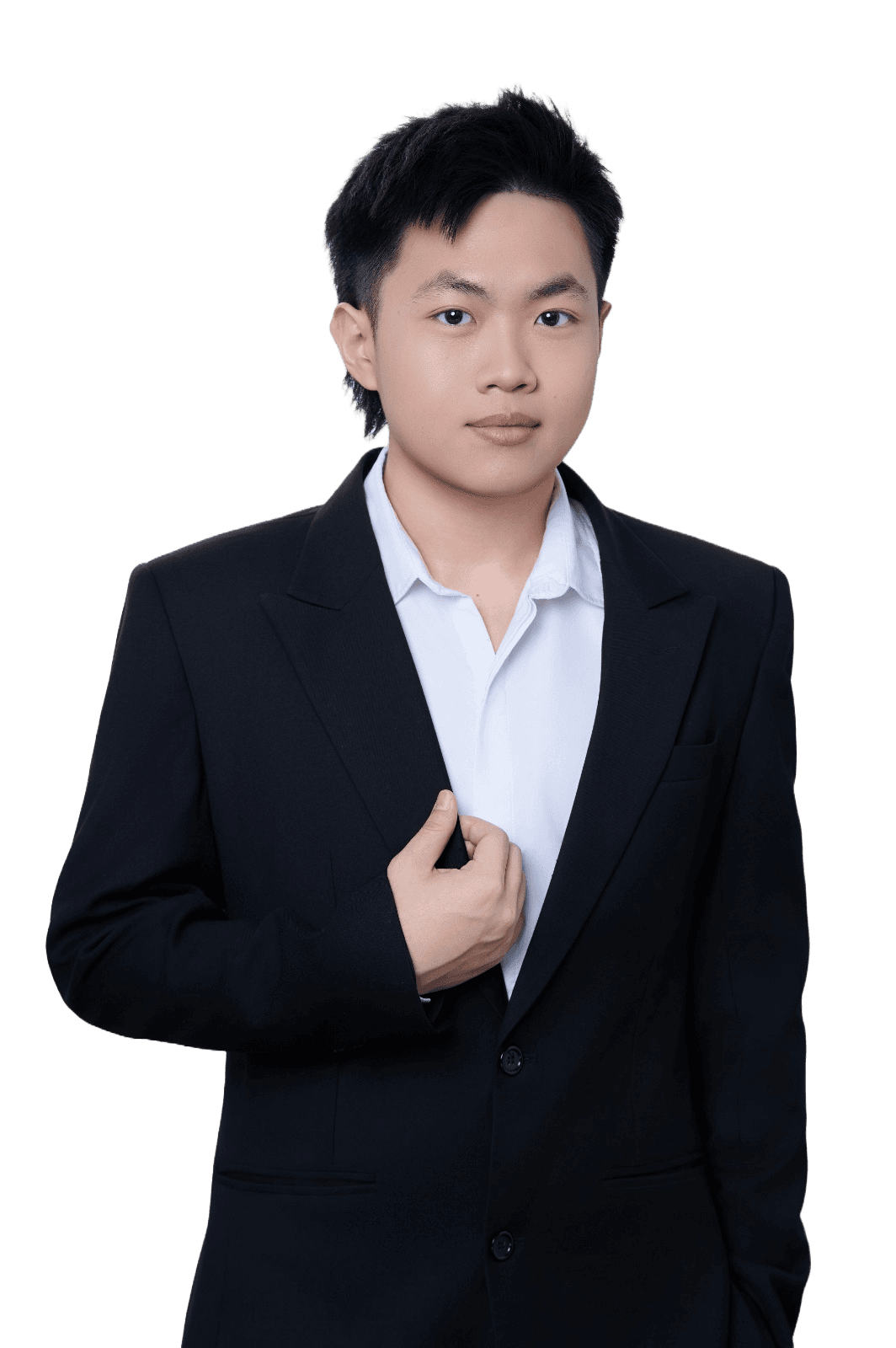
Xuan Bach Mai
Master of Financial Analysis at UNSW
Curious about AI, blockchain, and how they're quietly reshaping the world of finance.
My Story
Built by disruption, driven by curiosity
A career shaped not by the plan, but by what happened when the plan fell apart
The Beginning
A generation locked in
I was 17 when COVID froze the world. University arrived through a screen, the future felt uncertain, and I did what curious people do - I went looking for what was still moving. In 2021, one thing was moving faster than everything else: blockchain.
The Leap
Dropping the textbook, picking up the market
At 19, I walked away from university for a year and joined a blockchain VC firm in Ho Chi Minh City. No safety net, no senior to shadow - just a decision I had made and the drive to back it up. Within months I was analyzing tokenomics, assessing live crypto projects, and building a community from zero to 10,000 members in four months. I was also losing money at the same time I was making it. Every lesson landed hard, and that was exactly the point.
“The market doesn't care how old you are or how many semesters you've completed. It just tests whether you can think, adapt, and execute.”
The Grind
Climbing while the market was falling
By 2022 I was leading a 10-person BD team at a blockchain media company - closing conference partnerships and building revenue from scratch - while the broader market collapsed around me. Projects failed. Companies disappeared overnight. Colleagues left entirely. I stayed, and spent that time understanding why. What separates resilient models from fragile ones. What the technology still genuinely offered beyond the hype. That period taught me more about risk, human behavior, and staying composed under pressure than any course ever could.
The Crossing
Alone in Australia, competing to be the best
I arrived in Sydney knowing nobody. No network, no familiar faces - just a standard I had set for myself and the refusal to let anything lower it. I enrolled at Western Sydney University, graduated on the Dean's Merit List with a GPA of 5.92/7.00. Not because university came easily, but because I refused to let it not.
“Every assignment, every exam, every group project - I treated it the same way I treated a business pitch. Preparation, execution, results.”
The Upgrade
From practitioner to scholar and back
I went straight into a Master of Financial Analysis at UNSW, one of Australia's top universities. I finished with a distinction average while teaching blockchain and DeFi to 300+ students per term - passing on the same knowledge the market had once forced me to learn the hard way. The ability to move between real-world instinct and academic rigour is not something you can manufacture. It comes from living through both.
Now
Back home, and already looking ahead
I'm back in Vietnam, and I'm not here to start over. I'm here to apply everything - the instincts built in the depths of a crypto bear market, the analytical foundation earned across two degrees, and the conviction that has driven every decision since I was a teenager figuring out what mattered. I saw blockchain arrive before most people believed it was real. AI is following the same curve, except faster, bigger, and reshaping finance in ways most institutions aren't ready for. I've spent four years living at that intersection. I'm not done yet.
“I didn't wait for blockchain to become mainstream before jumping in. I'm not waiting for AI either.”
What drives my work
Curiosity before credentials
I tend to follow what genuinely interests me. Blockchain or AI pulled me in before I fully understood it, and that curiosity pushed me to learn faster than I would have in a classroom.
Always a student
Every major shift in my career has required starting over with a beginner's mindset- new market, new country, new discipline. I've gotten comfortable not knowing things yet.
Shaped by failure
I lost money in the crypto crash. I made decisions I'd revise in hindsight. Those experiences taught me more than the wins did and I try to carry that honestly into the work I do now.
Grounded in real markets
My interest in finance didn't start in a lecture, it started when I had skin in the game. That context helps me stay grounded when the numbers are easy to get lost in.
Comfortable with uncertainty
Startups, market crashes, moving abroad alone- most of my formative experiences came without a clear roadmap. I've learned to move forward even when I can't see the full picture.
Connecting dots across fields
Having worked across crypto, finance, and now AI, I often find myself at the overlap of things that don't usually talk to each other. I find that space genuinely exciting to work in.